

A dozen anti-nuclear activists protested in front of the Environmental Protection Administration (EPA) building in Taipei yesterday, accusing the government of having no solution for dealing with nuclear waste.
The protest occurred as an environmental impact assessment meeting was beginning at the EPA.
Thousands of anti-nuclear protesters clashed with police over nuclear waste issues in Germany on Friday.
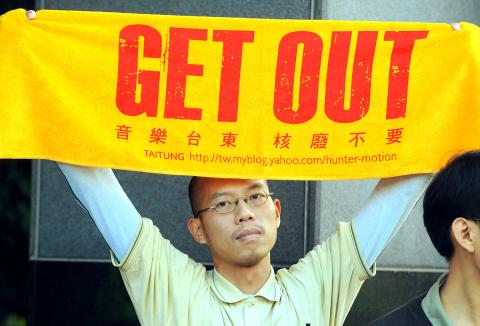
Photo: CNA
Earlier this month, the Ministry of Economic Affairs said that high-level radioactive waste could be disposed of outside of the country and that low-level radioactive waste could be disposed of in Taiwan, some within the plants and some in repositories, during a press conference on energy policy at the Presidential Office.
At yesterday’s second environmental impact assessment meeting on radioactive waste disposal policies, the Atomic Energy Council reported its strategies on nuclear waste storage, including putting the spent fuel rods in storage pools, land-based dry repositories and a final disposal site, while interim storage of spent fuel may include reprocessing abroad.
The protesters said the government was hiding the truth about the danger of both wet and dry storage of spent nuclear fuel by saying that the waste could be dealt with abroad, when actually the final disposal site might be in Taiwan.
They urged the government to halt operations at nuclear power plants to prevent the threat posed by an increasing number of nuclear fuel rods while no safe disposal site exists.
“There are two methods of disposal beyond our national borders. One is to dispose of the spent fuel at a final disposal site abroad, for which there is no precedent internationally,” Green Citizens’ Action Alliance secretary-general Hung Shen-han (洪申翰) said.
“The second is to ship the spent fuel abroad for reprocessing, meaning the uranium would be refined and recycled, but will still be shipped back to Taiwan,” Huang said. “It is irresponsible to say that we can dispose of the spent fuel beyond our national borders.”
The alliance said a feasibility study on the final disposal site would not be finished until 2037, but with the unstable geological conditions in Taiwan and possibly no safe disposal site abroad, it said it wondered where the large number of spent fuel rods would be stored.
“We suggest the government store spent fuel in the basement of the Presidential Office, to let -everyone know that it isn’t dangerous,” Gongliao Anti-nuclear Self-Help Association chairman Wu Wen-chang (吳文樟) said.
The protesting groups included the Green Party Taiwan, Wild at Heart Legal Defense Association, the Homemakers’ Union and Foundation, Taitung Anti-Nuclear, the Anti-Spent Fuel Association and several others.
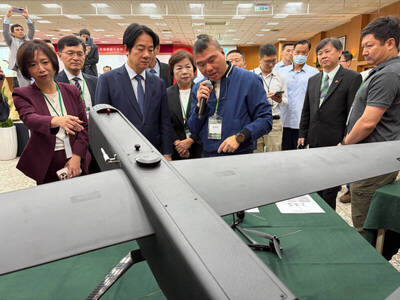
Two executives of drone supplier Jiin Ming Industry Co (錦明實業) have been detained and held incommunicado over the company's alleged use of prohibited China-made chips and camera lenses in drones supplied under recent military contracts, the Taoyuan District Prosecutors' Office said today. In a statement, prosecutors said they raided the offices of Jiin Ming — headquartered in Taoyuan — as well as those of its subsidiaries and its suppliers on Thursday last week. The raids followed a report that the company had breached its procurement contracts by putting the prohibited components into drones delivered to the military. During the raids, prosecutors summoned
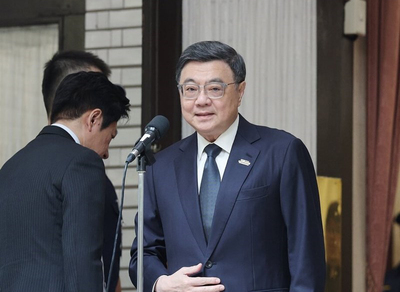
The government would continue monitoring online rumors that a pneumonic plague outbreak has spread from Russia into China and could enhance existing quarantine measures, Premier Cho Jung-tai (卓榮泰) said today. During a legislative meeting, Democratic Progressive Party Legislator Wang Ting-yu (王定宇) said rumors were circulating that the disease had spread across several Chinese provinces. He asked Cho whether the government was prepared to prevent the disease from spreading to Taiwan, given the frequent exchanges between Taiwan and China, and how concerned the government was about the alleged outbreak. The Ministry of Health and Welfare implemented border quarantine measures after briefing the Executive Yuan

South Korean boy band BigBang drew 120,000 fans to three concerts at Taipei Dome from Friday through yesterday, as the band thanked them for their support over their 20-year career. The Taipei Dome concerts were part of BigBang's "2026-2027 World Tour XX: Cosmos." Friday's concert was BigBang's first performance in Taiwan in 11 years. During the encore, group leader G-Dragon (GD) shouted "I love you" in Chinese and said he was especially happy to perform in Taiwan with bandmates Taeyang and Daesung. "Taipei, I'm very grateful to you all," GD said in Chinese, asking fans to wait for the band's return. Daesung thanked
A Chinese People's Liberation Army (PLA) Navy aircraft carrier group was being monitored after entering the western Pacific, the Ministry of National Defense said today, after Beijing yesterday criticized Taiwan for using a water cannon against a Chinese fishing boat near the Pratas Islands (Dongsha Islands, 東沙群島). A Chinese naval task group led by the aircraft carrier Liaoning (遼寧) yesterday sailed to the western Pacific for training, Chinese state-run Xinhua news agency quoted the PLA Navy as saying. “The drill is part of the annual routine training plan aimed at testing and improving the troops’ combat readiness and enhancing their ability to


 RSS
RSS